What Roof Types Are Common on Commercial Buildings?
Commercial buildings are far more varied in their roofing than houses, which mostly share a familiar pitched, tiled form. A warehouse, a retail park unit, an office block, and a workshop may each have quite different roofs, and those differences affect how the roof collects moss and debris and how it should be cleaned. For an owner or manager arranging maintenance, knowing what kind of roof the building has is a useful starting point.
This guide outlines the roof types common on commercial buildings and how each behaves with moss and cleaning.
Flat Roofs
Flat roofs are among the most common on commercial buildings, particularly offices, retail units, and modern industrial premises. Despite the name, a flat roof usually has a very slight slope to aid drainage, but it is far shallower than a domestic pitched roof.
How they collect growth. Because they drain slowly, flat roofs hold water on the surface and in any low spots or around blocked outlets, staying damp long after rain. That lingering moisture feeds moss and algae, and debris collects readily on the broad, flat surface. Flat roofs are, as a result, prone to moss and benefit from good drainage and regular clearing.
Cleaning considerations. Flat roofs need careful attention to drainage points and low areas where water and debris gather, and the cleaning approach is suited to the roof's surface and construction. Keeping outlets and
Gutter Cleaning clear is especially important on flat roofs to stop water pooling and feeding growth.
Low-Pitch Roofs
Many commercial buildings have low-pitch roofs, a shallow slope steeper than flat but gentler than a typical house. These are common on industrial units, warehouses, and some retail and agricultural buildings.
How they collect growth. A low pitch drains better than a flat roof but still more slowly than a steep domestic one, so it holds moisture longer than a house roof and collects debris in the shallower run-off. Moss establishes on the damper, slower-draining surface, particularly in shaded or sheltered sections.
Cleaning considerations. Low-pitch roofs are cleaned with methods suited to their surface and the way water and debris move across them. As with flat roofs, keeping the drainage clear helps limit the standing moisture that feeds growth.
Profiled Metal and Fibre-Cement Sheeting
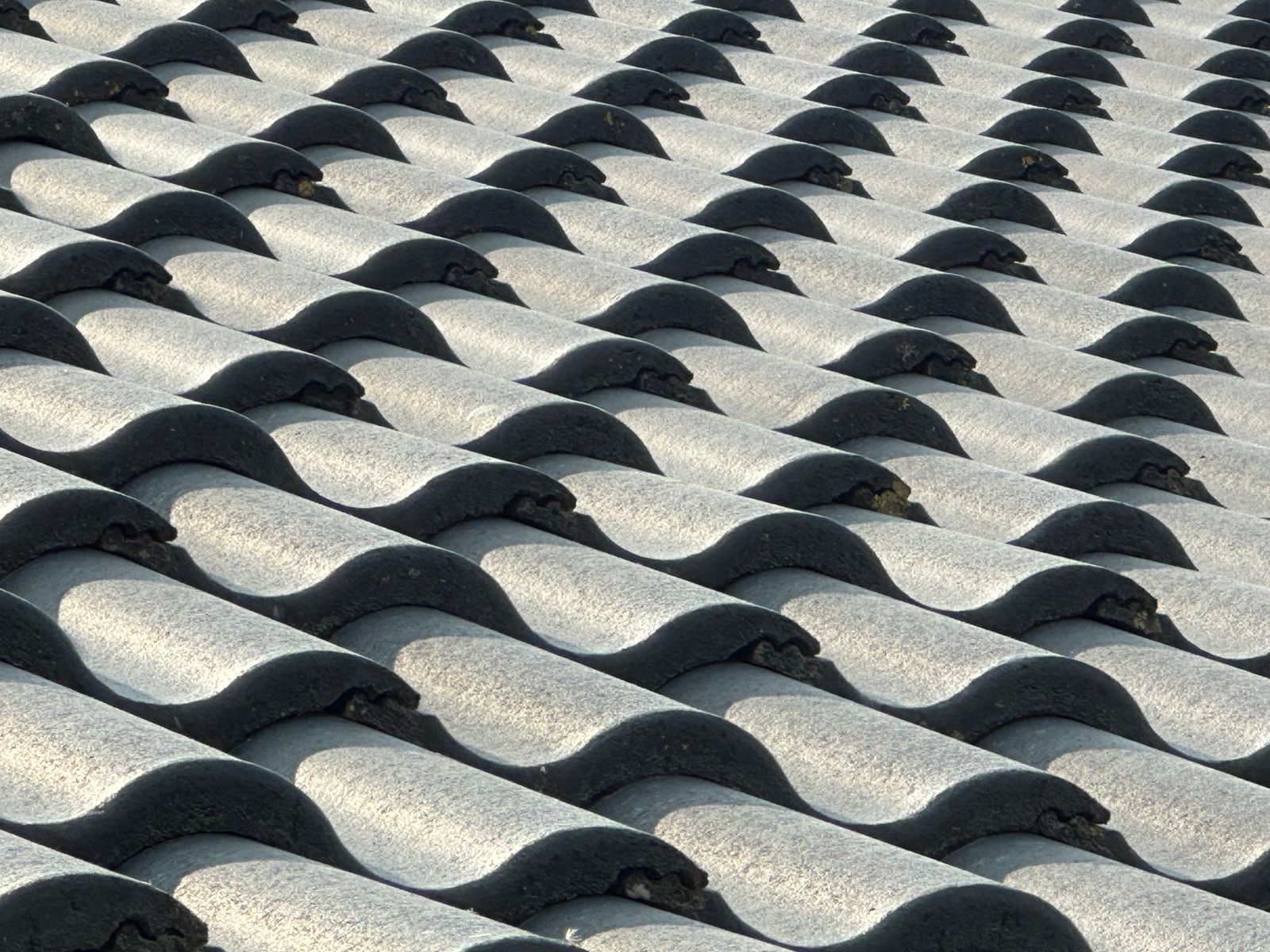
Large commercial and industrial buildings, warehouses, factories, agricultural and storage structures, often have roofs of profiled sheeting, made of metal or fibre-cement in corrugated or box profiles.
How they collect growth. The profiles, the ridges and valleys of the sheeting, can collect debris and hold moisture in their channels, giving moss and algae places to establish along the run of the sheet. Shaded sheeting stays damp and grows more readily, and older or weathered sheeting can hold growth more easily than new.
Cleaning considerations. Sheeting roofs are cleaned with approaches appropriate to the material and profile, taking care over the surface and any fixings. The channels and shaded areas are where growth concentrates and need particular attention.
Tip: If you are not sure what roof type your commercial building has, or it combines several, an inspection is the simplest way to find out. Many commercial buildings have more than one roof type across different sections, and each may need a slightly different approach, so a proper assessment of the whole roof is the right starting point.
Tiled and Slated Sections
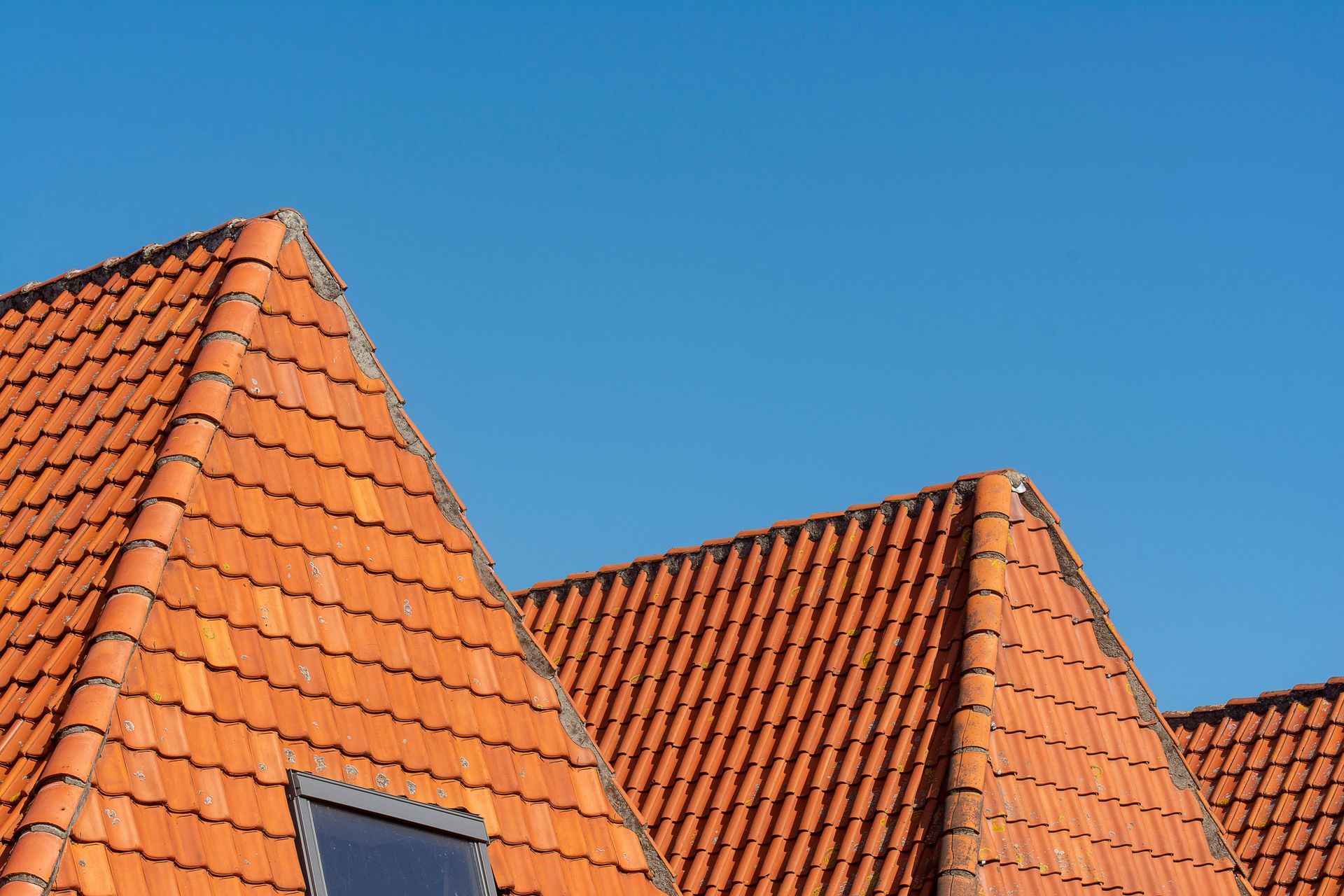
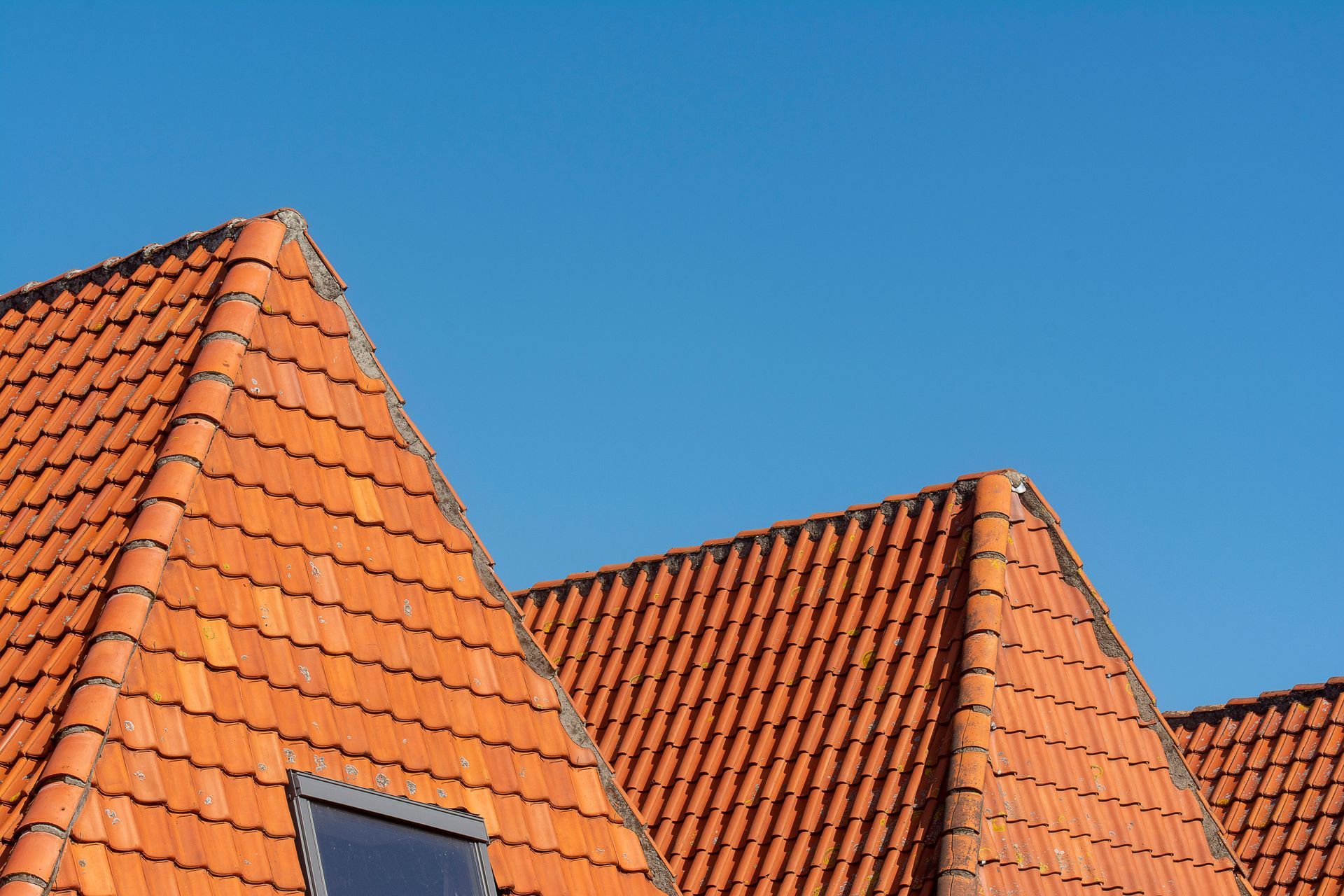
Some commercial buildings, particularly older properties, converted premises, and certain retail and hospitality buildings, have tiled or slated roofs much like domestic ones, or tiled sections alongside flatter areas.
How they collect growth. These behave like house roofs: moss establishes on shaded, north-facing slopes and in the joints, holding water against the tiles, while algae films the surface. Porous, weathered tiles collect growth faster, just as on a home.
Cleaning considerations.
Tiled commercial sections are cleaned with the same gentle, no-contact, water-based methods used on domestic roofs, protecting the tile surface and following up with biocide to slow regrowth. A
Roof Cleaning provider will match the method to the tiled areas as well as any flat or sheeted sections. In our 15 years on Sussex roofs, commercial buildings combining tiled and flat roofs are common, and each part is assessed and cleaned appropriately.
Common commercial roof types include flat roofs, low-pitch roofs, profiled metal or fibre-cement sheeting, and tiled sections on some buildings. Each behaves differently: flat and low-pitch roofs drain slowly and hold moss-feeding moisture, sheeting can collect growth in its profiles, and tiled areas behave like domestic roofs. Knowing your roof type helps determine how it collects growth and how it should be cleaned.
Frequently Asked Questions
Why does the roof type matter for cleaning?
Because different roof types collect growth and drain differently, and are cleaned with approaches suited to their surface and construction. A flat roof holds water and needs attention to drainage; profiled sheeting collects growth in its channels; tiled sections behave like domestic roofs. Knowing the roof type helps determine how it accumulates moss and the right cleaning approach, which is why an assessment identifies the roof type first.
Which commercial roof type is most prone to moss?
Flat and low-pitch roofs are particularly prone because they drain slowly and hold the moisture moss needs, and they collect debris across their broad surfaces. Shaded profiled sheeting and weathered tiled sections also collect growth readily. In general, the slower a roof drains and the more debris and shade it has, the faster it accumulates moss, which is why flat commercial roofs often need regular attention.
Can all these roof types be cleaned safely?
Yes, with methods matched to each. The gentle, no-contact, water-based principle applies across roof types, with the specific approach suited to the surface, whether flat, low-pitch, sheeted, or tiled, and to safe access for the building's height and layout. An assessment establishes the roof types present and how each should be cleaned, so the whole roof is handled appropriately.
My building has more than one roof type. Is that a problem?
Not at all; it is common on commercial buildings, which often combine flat or sheeted areas with tiled sections. Each roof type is simply assessed and cleaned with the approach suited to it. A proper assessment of the whole roof identifies the different types and plans the cleaning accordingly, so a mixed roof is handled as a set of appropriately-treated sections rather than a single uniform surface.
How do I find out what roof type my building has?
An inspection is the simplest way, especially if the building is large, high, or combines several roof types. A provider assessing the roof will identify whether it is flat, low-pitch, sheeted, tiled, or a combination, and how each part collects growth and should be cleaned. This assessment is the natural starting point for planning maintenance on a commercial roof whose type may not be obvious from the ground.
Get your commercial roof assessed — Book an inspection to identify your roof type and the right cleaning approach. Ben's Roof Cleaning handles flat, sheeted, and tiled commercial roofs. Call 0172 244 3255.
Knowing the Roof to Clean It Right
Commercial buildings carry a wider range of roof types than houses: flat roofs and low-pitch roofs that drain slowly and hold moss-feeding moisture, profiled metal and fibre-cement sheeting that collects growth in its channels, and tiled sections that behave like domestic roofs. Many buildings combine several. Each type accumulates growth differently and is cleaned with an approach suited to its surface, construction, and access. For an owner or manager, knowing the roof type is the starting point for sensible maintenance, and an assessment identifies what the building has and how each part should be cleaned, so the whole roof is kept clear whatever its form.